
The Stolen Son: Exposing a Human Rights Crime Through Narrative
Sector: Human Rights / NGO & Purpose-Led / Investigative Media
The Challenge
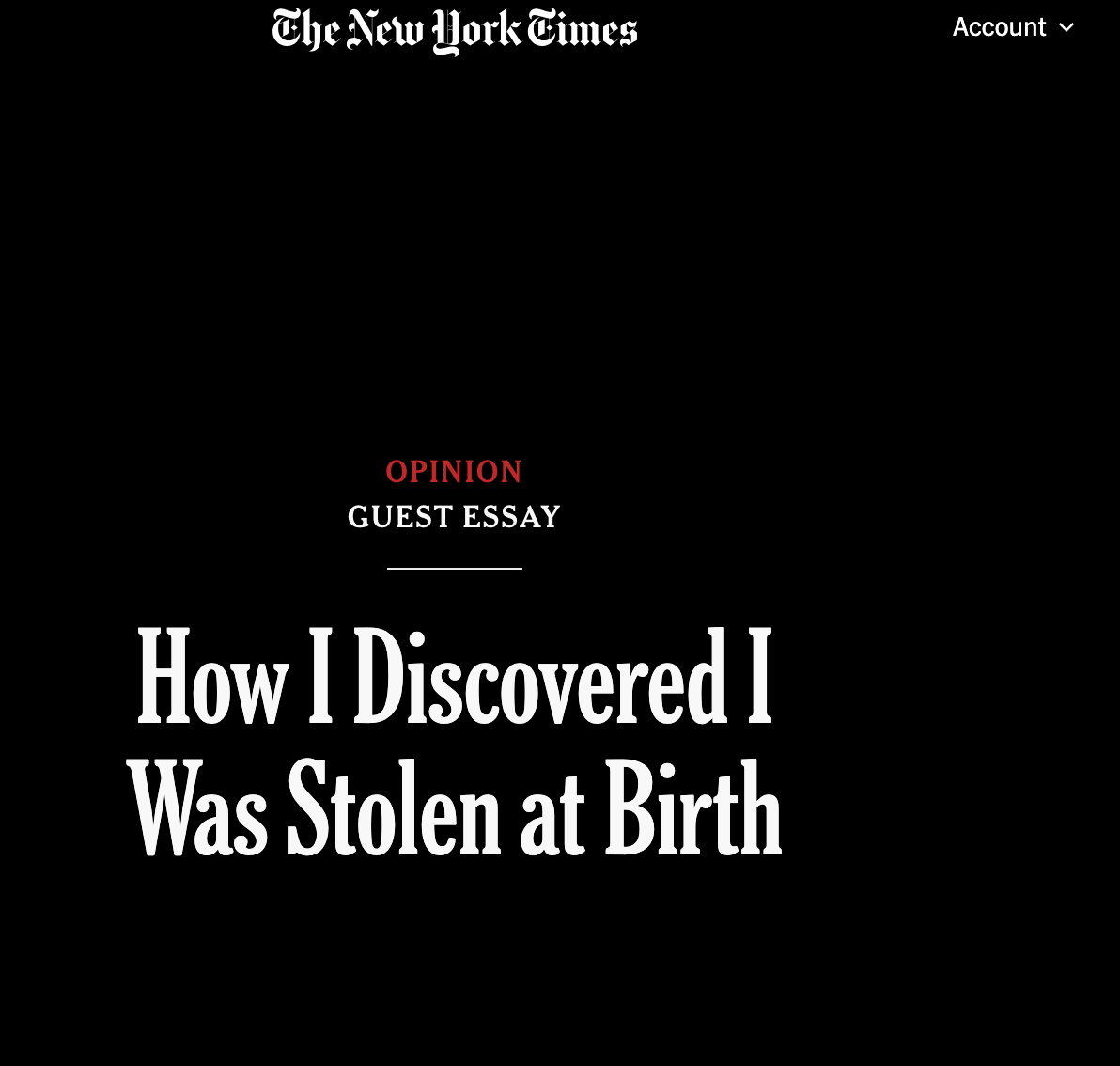
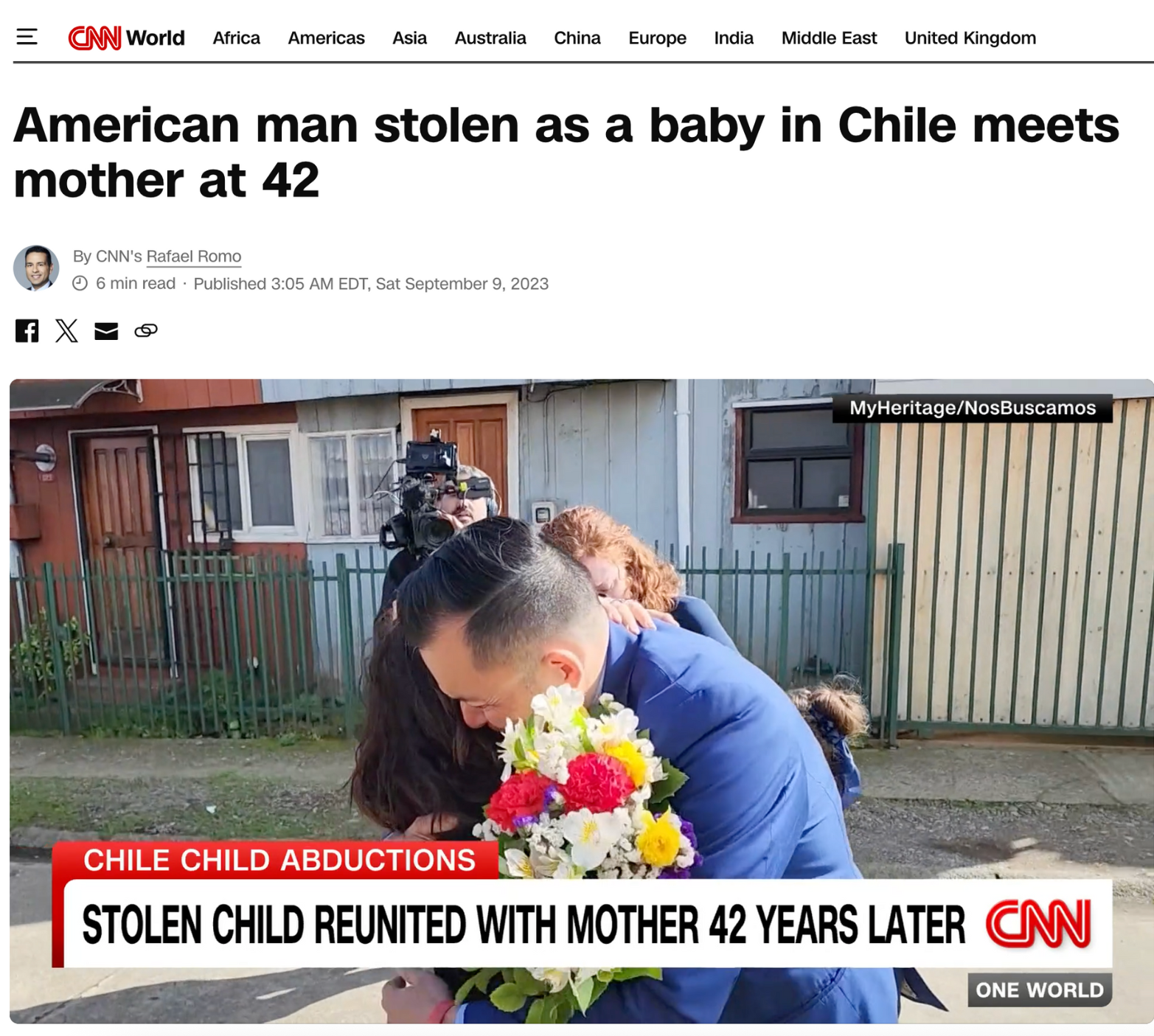
Following a DNA match through MyHeritage, Jimmy Thyden discovered he was one of the thousands of babies illegally taken from their mothers during the Pinochet era in Chile. What began as a private discovery carried profound legal, political, and human rights implications.
The brief was to manage international communications under extreme time pressure — with fewer than 42 days since the DNA discovery and a narrow window to prepare global media ahead of Jimmy’s journey to Chile to search for his mother.
Strategic Approach
The story was framed not as a reunion alone, but as evidence of a systemic human rights crime. The narrative centred on justice through discovery — positioning Jimmy’s search as a lens through which a much wider historical injustice could be understood.
Rather than retrospective coverage, the strategy was to create a live, documentary-style media moment that would unfold in real time. This approach ensured the story retained urgency, credibility, and moral clarity, while keeping Jimmy’s voice — and the broader issue of forced adoption — at the centre of the coverage.
Campaign Execution
Operating under significant time constraints, international media were invited to follow the journey as it happened. A coordinated media pool captured each stage — from Jimmy’s departure in the United States, to his arrival in Santiago, and ultimately to the first meeting with his mother after more than four decades.
Communications were managed with a dual focus: facilitating global coverage while safeguarding the emotional and personal integrity of those involved. High-pressure broadcast environments were handled carefully to ensure accuracy, dignity, and consistency as the story scaled across markets.
Impact & Global Reach
Within 48 hours, the story achieved global saturation. Live broadcast segments and in-depth reporting appeared across CNN, Good Morning America, NBC News, and BBC World News, with further amplification through The New York Times, The Guardian, and Associated Press.
The scale and seriousness of the coverage prompted formal engagement from Chilean authorities, including meetings with investigative teams examining historic adoption corruption.
Services Delivered
Rapid-response narrative strategy (72-hour turnaround)
International broadcast coordination and pooled media management
Human rights and investigative positioning
Family liaison and advocacy under intense media scrutiny
Crisis communications and logistical coordination
Global syndication monitoring and management
Results
The campaign demonstrated how narrative, when handled responsibly, can do more than inform — it can force accountability. By treating the story as a matter of justice rather than spectacle, the work helped bring renewed international attention to an unresolved human rights crisis, while protecting the dignity of those at its centre.
Reach
4.5 billion potential impressions worldwide.
Coverage
2,500 unique articles and hundreds of hours of broadcast time.
Markets
USA, Chile, UK, and Europe